

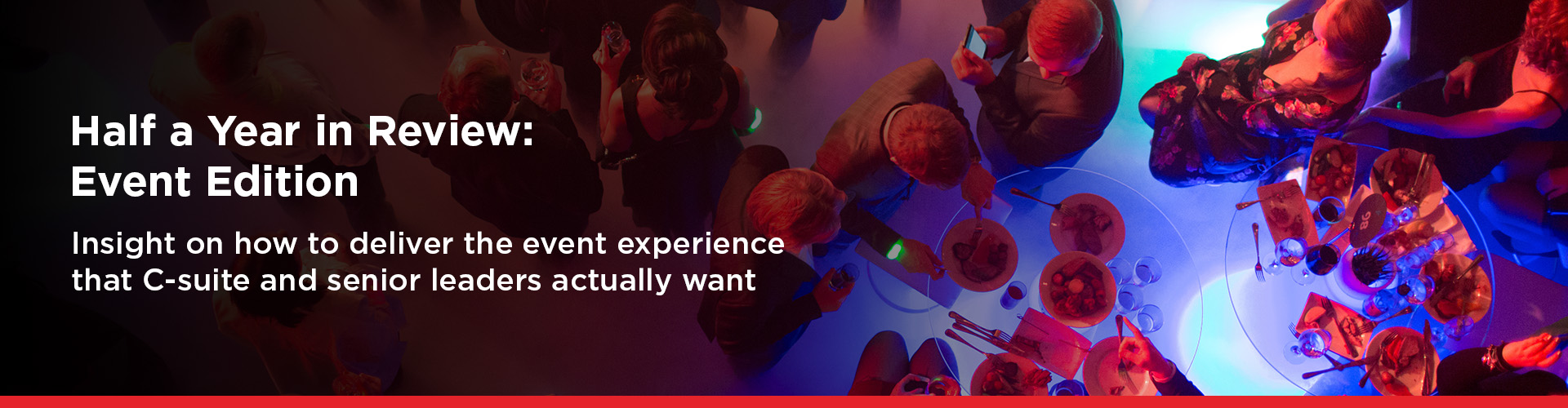
We’re halfway through the year and if there’s one thing that’s become clear, it’s this: not all events are created equal and your audience knows it.
C-level and senior IT leaders are more selective than ever. They’re not showing up just because there’s an invite in their inbox. They’re making calculated decisions about where to spend their time and more importantly, where not to.
What’s been working?
Half-day events have hit a sweet spot. They’re long enough to deliver meaningful content, but short enough to avoid fatigue. They also leave room for something that’s arguably just as valuable as the sessions themselves: networking. When you get the right people in the room, those conversations often matter more than any slide deck.
We’ve also seen a clear shift in how content is consumed. The traditional hour-long session is losing its appeal. Breaking things into 15, 20 or 30-minute segments keep energy up and makes information easier to absorb.
In short, events that are focused, well-paced and intentional are the ones people are actually engaging with.
Now for the flip side – what hasn’t been working.
Full-day events are becoming harder to justify. It’s not just about attention spans (although that’s part of it). It’s cognitive overload. Asking someone to absorb information for six to eight hours is unrealistic, and the drop off shows. After a certain point, engagement dips and it’s hard to recover from the nearly empty room.
Even the small details are making a difference. Something as simple as a handwritten name badge can subtly signal disorganisation. On the other hand, a smooth check-in process with printed badges – even for walk-ins – sets a professional tone from the start. These things matter more than we sometimes think.
So, what does a “good” event actually look like for senior IT leaders?
It starts with relevance – but not just in the present tense. This audience isn’t looking for a recap of what’s already happening. They want to know what’s next. What’s coming. What signals they should be paying attention to before the rest of the market catches on.
Thay’s where strategic foresight comes in. Events that lean into future-focused thinking and bring in cross-industry perspectives to challenge assumptions tend to stand out. When you connect dots across different sectors, you create conversations that feel genuinely valuable.
Networking also needs to be more intentional. Open mingling has its place, but at a senior level, curated introductions go further. Think roundtable, invite-only sessions or facilitated introductions. When every conversation has a purpose, the overall experience becomes far more impactful.
And then there’s execution – arguably the most underrated piece. A delayed sessions or a missing touchpoint doesn’t just create friction but chips away at trust. On the other hand, well-run events feel seamless. They create space for people to think, connect and even step away briefly if needed without missing out.
At the end of the day, the events that resonate are the ones that are designed with intent. They’re clear on who they’re for, what they’re delivering and how that audience prefers to engage.
Because if there’s one thing this year has reinforced, it that’s people aren’t attending more events, they’re attending better ones.
Need event management for your next occasion? We’re here to help!
We endeavour to become an extension of your team and to create real connections with your business, utilising our extensive knowledge of channel marketing to develop campaigns that give you real traction in the IT sector.

Brigette Lay
Digital Marketing Account Manager
More Insights From RAW Marketing

Fortitude Valley, Qld 4006 MAP